Budapest Public Transport Guide 2026: tickets, lines, prices and more
Content
Budapest has one of the best public transport systems in Europe. It’s efficient, affordable, surprisingly easy to use, and truly takes you anywhere in the city, at any time of day.
With metro lines, trams, buses, trolleybuses, suburban railways and even public bikes, you’ll always find a quick and reliable way to get around. In fact, for most routes, public transport is often faster and more practical than calling an Uber.
But arriving in a new city can feel overwhelming, and it’s completely normal to be unsure about how everything works at first. Which ticket should you buy? How do you validate it? Where do you find each type of transport? What if you’re traveling at night?
This guide answers all of that. It’s a complete overview of Budapest public transport, written especially for first-time visitors. Here you’ll find everything you need to ride like a local, avoid fines, and choose the best ticket for your stay.
So save this guide to your favorites and keep it for your trip! It will make your time in Budapest so much easier!
How is public transport in Budapest?
Budapest’s public transport system is one of the city’s biggest strengths. It’s punctual, extensive, affordable, and operates 24 hours a day. No matter where you’re staying, you’ll always find a connection.
Every single day, the city moves passengers using more than 1,900 vehicles, including buses, trams, trolleybuses, metro lines and suburban railway trains. Altogether, they make over 43,000 departures per day, ensuring frequent service and short waiting times.
Public transport in Budapest is divided into two operational periods:
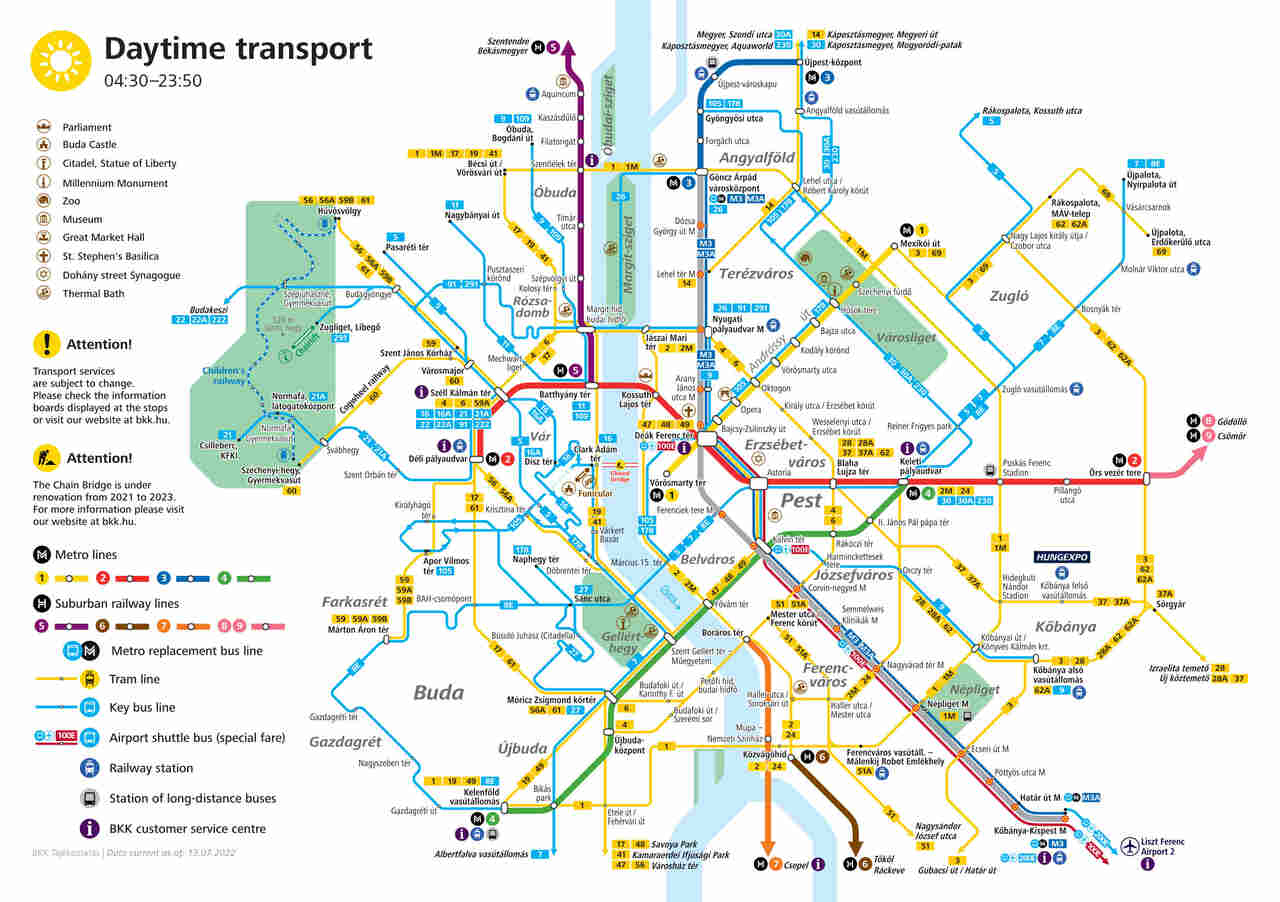
- Daytime transport: 04:30–23:50
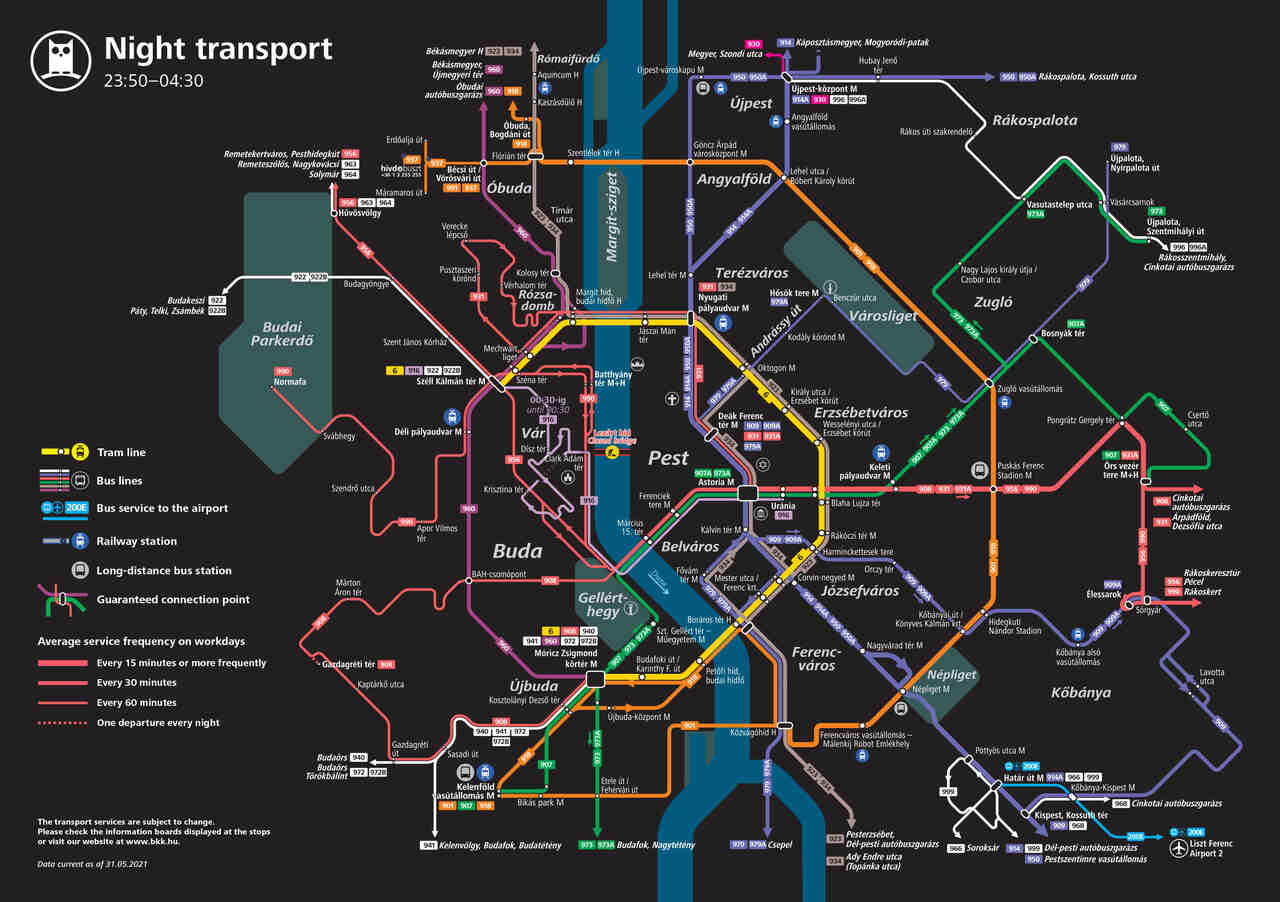
- Night transport: 23:50–04:30
Below, you’ll find all the details on how each one works.
Daytime transport
During the day, Budapest’s transport network covers the entire city extremely well. You can reach every district using frequent metro trains, trams, buses and trolleybuses. The city has four metro lines connecting the most important transport hubs, while trams link many key points of the city centre and the Danube riverfront.
Most major metro stations and busy hubs have large city maps, and BKK customer service centres can assist if you ever need help planning your route.
Night Transport
Nighttime service operates differently from daytime, but it remains very reliable (which is great news for travellers enjoying Budapest’s nightlife).
The 4 and 6 trams run all night along the Grand Boulevard, including the stretch that reaches Nyugati railway station. These trams are frequent, safe, and one of the easiest ways to move around after midnight.
Beyond the boulevard, Budapest relies on a very well-connected network of night buses. All night bus lines start with the number 9, and together they cover the entire city, including the outer districts.
Whether you’re returning from a ruin bar, a concert, or a late-night dinner, you’ll always find a way home.
Transport options in Budapest
Budapest has a wide variety of transport options, and each one helps you move around the city quickly and efficiently. Below is an overview of every public transport option available!
Metro
Budapest has four metro lines, and together they connect the main tourist attractions, train stations, and busy hubs across the city.
The metro is fast, reliable, and usually the easiest way to travel longer distances. Trains run frequently (every 3 to 10 minutes, depending on the time of day), and stations are well-marked with maps and signage to help you navigate even if it's your first time in the city.
Below, you’ll find a guide to each line, starting with the most historic of all: the M1.
Metro Line M1 (yellow)
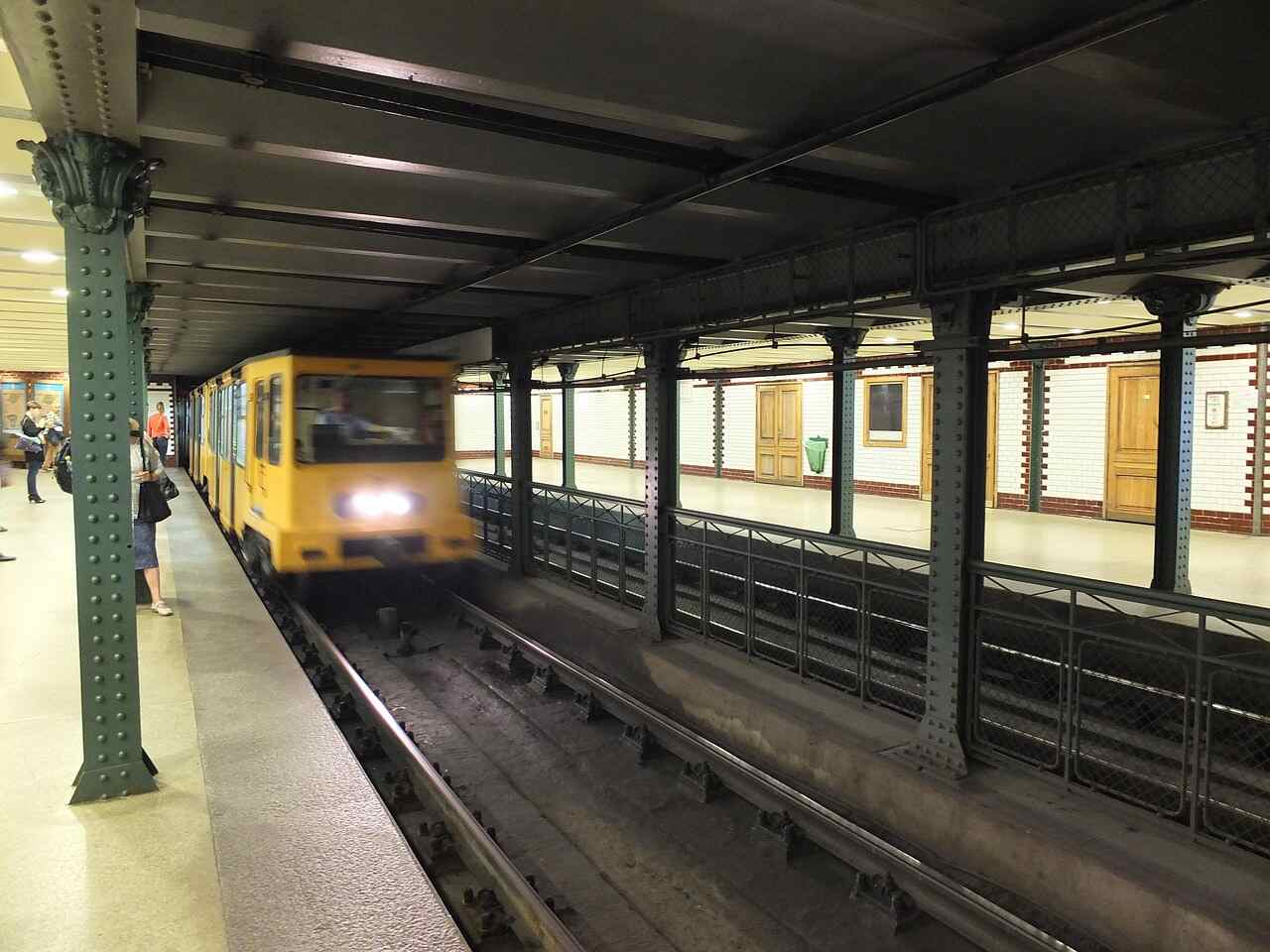
The M1 is much more than a metro line, it’s a piece of history. Opened in 1896, it was the first underground railway in continental Europe, and today it remains one of the most charming ways to move around Budapest.
Everything about the M1 feels retro in the best possible way. The stations have a classic, old-world design, and the trains themselves are smaller, vintage-looking and beautifully preserved.
Even if you don’t need to use this line during your stay, it’s worth riding at least once just for the experience!
But chances are you’ll actually need it. The M1 runs underneath Andrássy Avenue and connects several major points of interest, including:
- Vörösmarty tér;
- Opera House;
- House of Terror Museum;
- Heroes’ Square (Hősök tere);
- City Park (Városliget).
It’s also the line you’ll take if you’re heading to the Széchenyi Thermal Bath, one of Budapest’s most famous attractions.
Metro Line M2 (red)
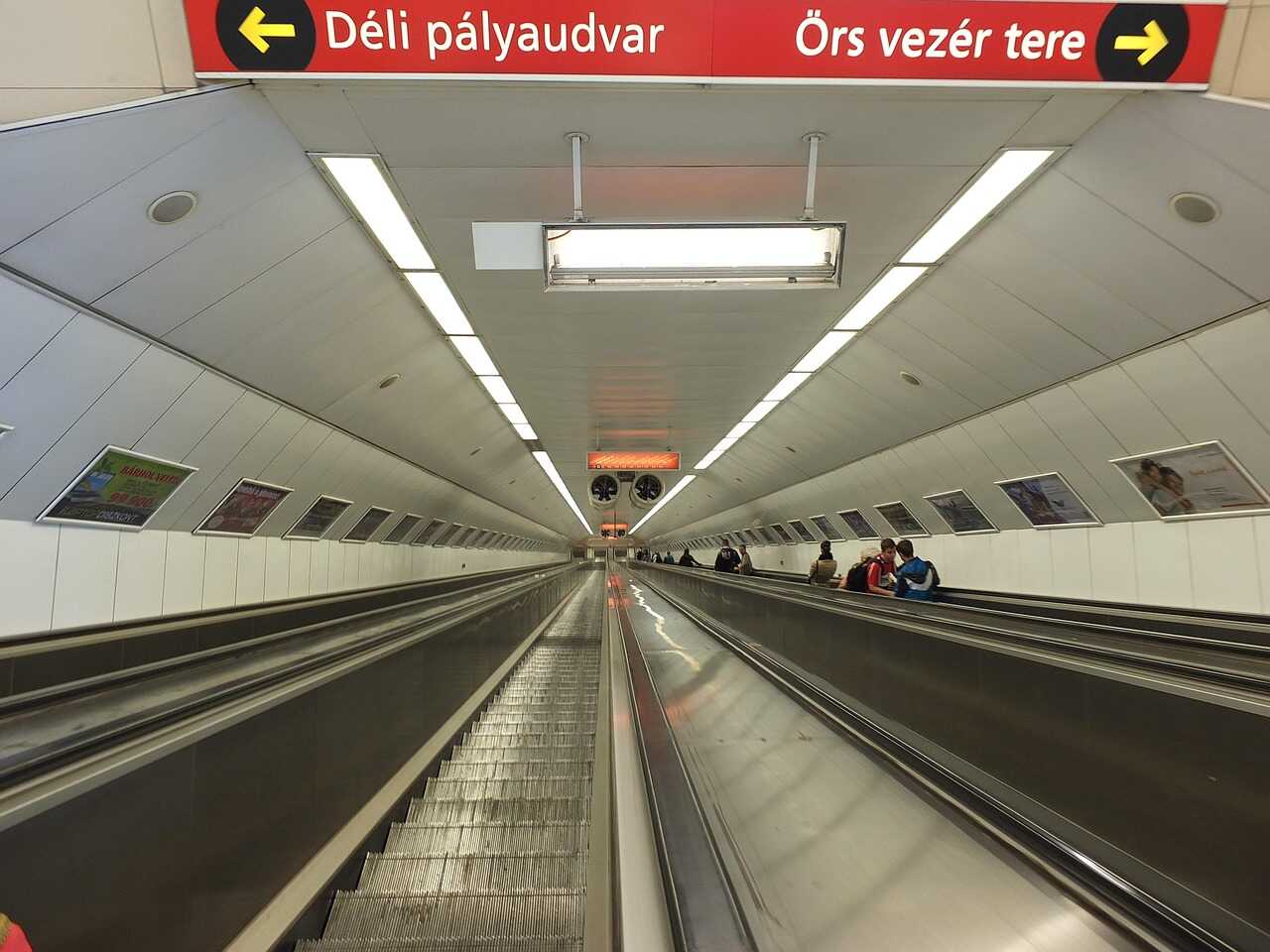
The M2 is the deepest metro line in Budapest, and you’ll notice it immediately: the escalators are huge — and fast. It’s a fun (and slightly thrilling) part of the experience, but also a very efficient way to reach some of the most important areas of the city.
This line crosses Budapest from Buda’s Déli Railway Station to Pest’s Örs vezér tere, connecting key transport hubs on both sides of the river.
For tourists, the most useful stations are:
- Kossuth tér: the stop for the Hungarian Parliament and one of the most iconic squares in the city;
- Deák Ferenc tér: the largest transport hub in Budapest, where all three central metro lines meet. It’s also close to many major attractions, shops, cafés and restaurants;
- Batthyány tér: located on the Buda side, this station offers one of the most beautiful views of the Parliament, especially at night, from across the Danube.
Metro Line M3 (blue)
The M3 is one of the most practical metro lines in Budapest, especially if you’re arriving from the airport. If you take the 200E bus from Budapest Airport, its final stop is Kőbánya-Kispest, which is the first station of Line 3 — making it the easiest connection into the city center.
The M3 crosses the city from south to north and stops at several important hubs and tourist-friendly areas. One of the most notable stations is Nyugati pályaudvar, a major railway station designed by the Eiffel Company, and the point of arrival or departure for many domestic train routes. If you’re traveling by train within Hungary, you’ll probably pass through here.
The line also connects to Deák Ferenc tér, the main interchange station in Budapest, where the metro lines M1, M2 and M3 meet.
For sightseeing, some of the most useful M3 stations include:
- Kálvin tér: a lively area filled with restaurants, cafés, and museums;
- Arany János utca: the closest metro stop to the St. Stephen’s Basilica, one of the most visited landmarks in the city.
Metro Line M4 (green)
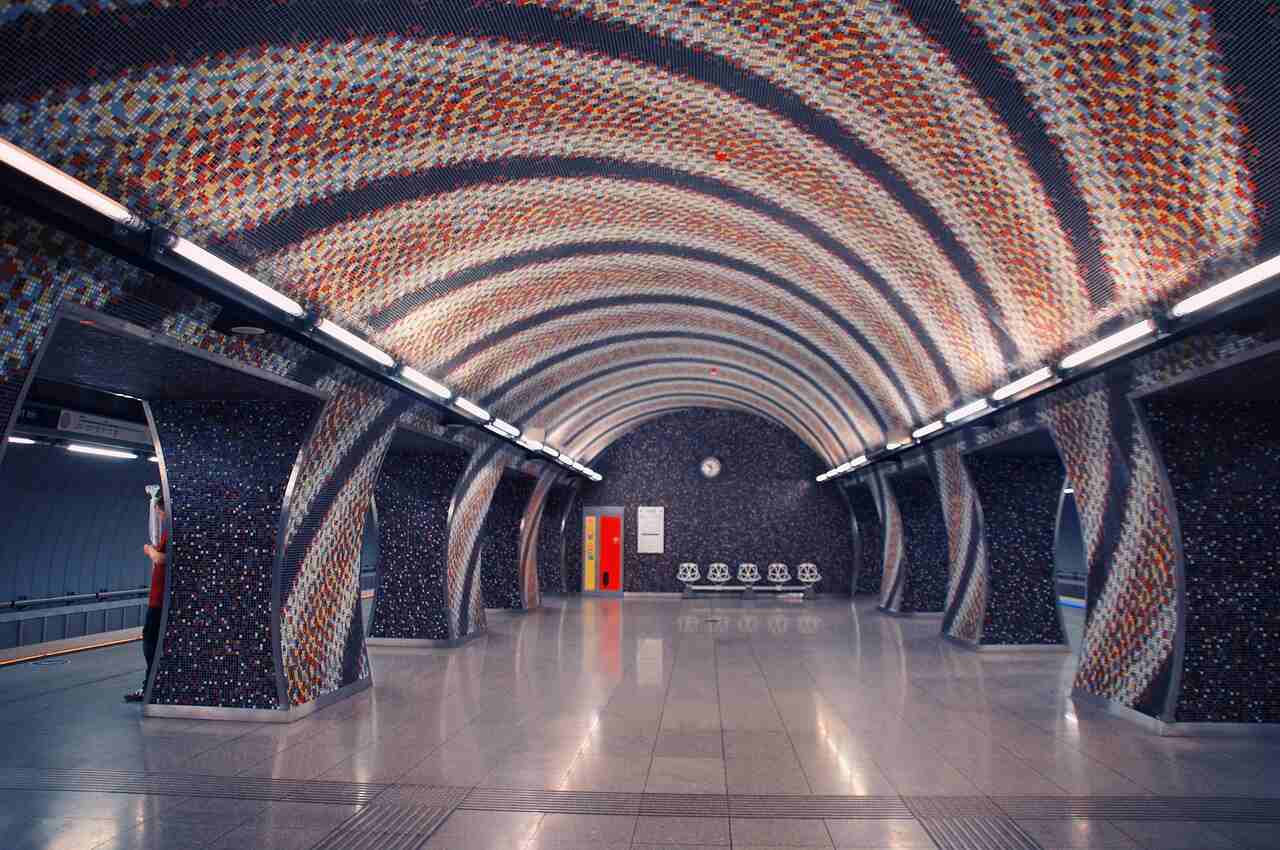
The M4 is the newest and most modern metro line in Budapest. Unlike the others, it doesn’t pass through Deák Ferenc tér, so you’ll probably use it less often. Still, it’s a very convenient line with several interesting stops — and some of the most beautiful contemporary metro architecture in the city.
Two stations are especially useful for visitors:
- Gellért tér: from here, you can walk up Gellért Hill (Gellért-hegy) for one of the most breathtaking views of Budapest;
- Fővám tér: right next to the Great Market Hall and Liberty Bridge, making it a perfect starting point for exploring the Market and the riverfront
Trams
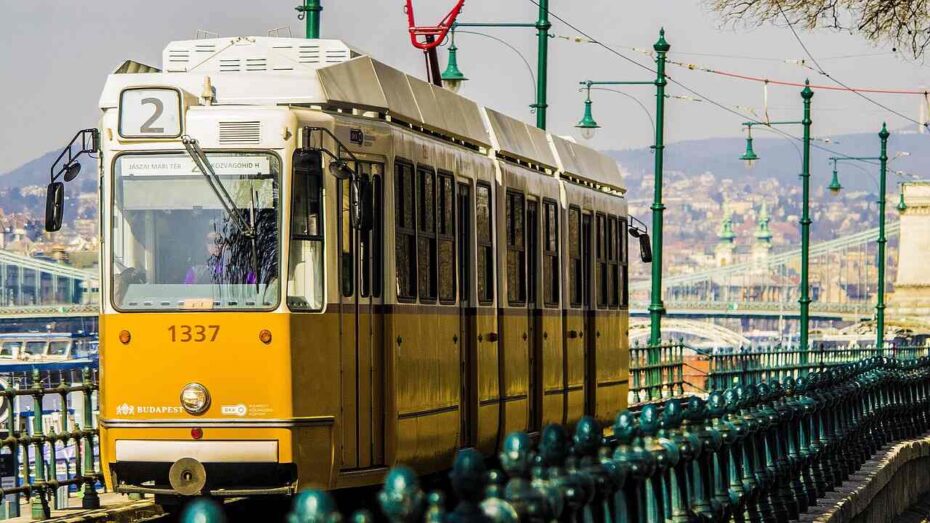
Budapest’s tram network is one of the most beautiful ways to explore the city. With more than 40 lines crossing the historic centre, trams are efficient, frequent, and incredibly scenic — some of them offering postcard-worthy views along the Danube.
You’ll notice that Budapest has two types of trams: charming older models and sleek, modern ones. Both are comfortable, but the retro versions are especially iconic and feel like stepping into another era. Riding a tram is truly one of those unmissable Budapest experiences!
Below are the tram lines most useful for tourists:
Tram Lines 2, 2B and 23
Often listed as one of the most beautiful tram routes in the world, Line 2 runs along Pest’s riverbank with stunning views of the Danube and the Buda Hills. Along the way, you’ll pass landmarks like the Chain Bridge, the Hungarian Parliament, and the Great Market Hall.
The best stretch to ride is from Fővám tér to Jászai Mari tér (or the other way around). This is where the views are at their best and where you’ll get the full riverfront experience.
@budapestfortourists This is the tram 2, one of the best (and cheapest!) ways to see Budapest lights. ➡️ Take the tram 2, 2B or 23 from Jászai Mari tér! 💰HUF 500 ( €1,25) for a single ticket - or you can use your transport pass You can do this both day and night. The view is worth it anytime! #budapest #budapestnight #traveltips ♬ Amore mio aiutami - Version 3 - Piero Piccioni
Tram Lines 19 and 41V
These two run along Buda’s riverside, offering a mirrored version of the Tram 2 experience, from the opposite shore. They connect Batthyány tér (great spot to photograph the Parliament from across the river) to Gellért Hill.
@budapestfortourists If there’s a prettier city out there, I haven’t found it yet #budapest #parliament ♬ You Send Me - Original - Sam Cooke
Tram Lines 4 and 6
These two lines are among the busiest tram routes in Europe and run 24/7 along the Grand Boulevard. They’re extremely practical for both locals and visitors because they pass through areas full of bars, cafés, restaurants, and shops, especially around Oktogon, Király utca, Blaha Lujza tér and Margit Bridge.
They also connect with all other metro lines, which makes them a great option for moving easily between different parts of the city.
Buses
Budapest’s buses cover areas that the metro and trams don’t reach, especially the residential neighborhoods and the hills of Buda. They’re clean, frequent, and a great option when you need to travel to places slightly farther from the city center.
Many routes offer convenient connections to metro stations, major squares, and tourist areas, and they’re often the best choice if you’re staying in parts of Buda with steeper terrain.
You’ll also see articulated buses, electric buses, and modern low-floor models that make boarding easier with luggage or strollers.
Even though trams and metro lines tend to be the easiest for first-time visitors, buses are a reliable backup (and sometimes the only direct route to where you’re going).
Night buses
Budapest also has a strong network of night buses, which operate once the daytime system closes. Their numbers start with 9, and they cover the entire city.
We already explained them in the Night Transport section, but it’s worth reinforcing: they’re safe, reliable, and extremely helpful after midnight when you’re heading home from nightlife areas.
Suburban Railway (HÉV)
The HÉV is Budapest’s suburban railway system, and it’s the best option when you want to explore areas just outside the city limits. The trains are green, comfortable, and easy to use, connecting Budapest with nearby towns and neighborhoods that aren’t accessible by metro.
Although most tourists spend their time in the central districts, the HÉV can be very handy for a few popular day-trip destinations. The most useful lines are:
- H5 — Szentendre Line: this is the one tourists use the most. It connects central Budapest to Szentendre, a small, colorful riverside town known for its art galleries, baroque streets, museums, and cafés;
- H6 and H7 — Csepel and Ráckeve Lines: these lines serve residential and southern areas. They’re not typically used by visitors, unless your accommodation is along the route;
- H8 and H9 — Gödöllő Lines: these routes go toward Gödöllő, home to the Royal Palace of Gödöllő, one of Hungary’s most beautiful baroque palaces. If you’re interested in history or architecture, this can be a great half-day trip!
All HÉV trains connect with the regular public transport network, so you can easily switch to metro, tram, or bus once you reach the city.
Public Bikes (MOL Bubi)
MOL Bubi is Budapest’s public bike-sharing system, and it’s a great way to explore the city at your own pace. With 2,460 bikes available across 222 stations, it operates 24/7, making it perfect for short trips, sightseeing along the Danube, or simply moving between neighborhoods without relying on public transport.
To use the service, all you need to do is download the MOL Bubi app, register your bank card, and unlock a bike from any station. The app also shows you nearby docking points, available bikes, and where to drop them off.
How much does it cost?
MOL Bubi works on a Pay As You Go system. Here’s how the pricing works:
- 100 HUF one-time bank card registration fee, which includes the first 2 minutes of your first ride;
- After that, the cost is 50 HUF per minute, rounded up to each minute you start;
- You must return the bike to an official MOL Bubi station — if you don’t, there is a 5,000 HUF off-station closing surcharge.
For short, scenic rides, it’s a fun and flexible option. Just remember to check the map in the app before ending your trip to avoid extra fees!
How to validate your ticket on Budapest public transport
One thing that surprises many visitors is that Budapest’s public transport system has no turnstiles. You can walk straight onto the metro, tram, or bus. But that does not mean you can skip validating your ticket!
Inspections are frequent, especially in tourist areas, and riding without proper validation almost always leads to a fine.
Here’s how it works:
Single tickets
Single tickets must always be validated at the start of your trip. The process is simple, but it changes depending on whether you’re using a paper or digital ticket.
Paper Tickets
If you’re using a physical ticket, you must validate it as soon as you board. Here’s how it works:
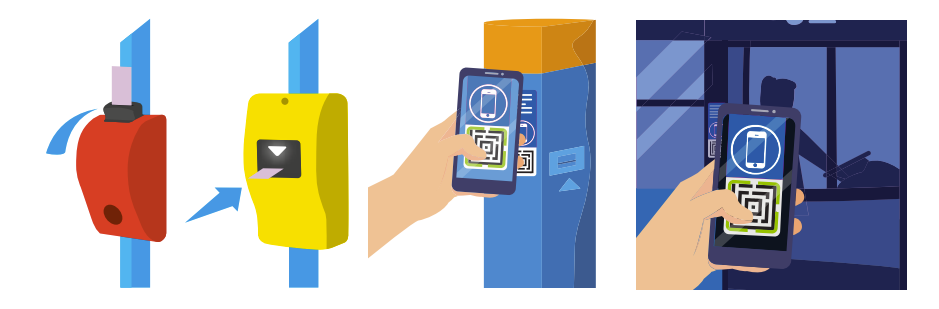
- On trams and buses: use the yellow electronic validator. Insert the ticket into the slot and remove it when the red light flashes;
- On older vehicles: you may find the red manual validator. Insert the ticket, pull the handle toward you, and it will punch a hole;
- On the metro: validate your ticket at the machines located before the escalators. These machines have both a paper slot and a QR scanner.
Always keep your ticket until the end of your journey. Inspectors will ask to see it!
Digital Tickets (BudapestGO App)
If you bought your ticket through the BudapestGO app, validation happens by scanning a code sticker:
- Metro: scan the QR code placed next to the paper-ticket validators at the station entrance;
- Trams and buses: scan the QR code found outside, next to the vehicle door
Time-based tickets (30-minute or 90-minute) must be validated every time you board a new vehicle.
Budapest Pay&GO
On certain routes (such as the 100E Airport Express and the Metro M1) you can use the Budapest Pay&GO device. Simply tap your bank card and your purchase and validation happen automatically at the same time.
Passes (Daily, Weekly, Monthly)
Passes are much simpler because they do not require validation. They activate automatically from the start date printed on the ticket or selected in the app. You only need to show the pass when an inspector requests it. If your pass is linked to a photo ID, you must carry the same ID with you.
Penalty fares
If you travel without a validated ticket or a valid pass (or without the ID linked to your pass), inspectors are allowed to issue a fine. You can pay:
- 12,000 HUF (~€32) on the spot (cash or card, depending on the inspector);
- 25,000 HUF (~€66) if you choose to pay later at a BKK Customer Centre.
How do you pay for public transport in Budapest?
Budapest public transport tickets are easy to buy, and you’ll find several options throughout the city. Whether you prefer using your phone or buying a physical ticket, the process is simple and fast. Here are the main ways to purchase your tickets.
BudapestGO App
The BudapestGO app is the official digital platform for buying tickets and passes. You can purchase single tickets, time-based tickets, airport tickets, or travelcards directly from your phone.
It’s convenient because you don’t need to find a machine, but remember: the app requires internet and battery to work. If your phone dies or you lose connection, you won’t be able to validate or show your ticket.
Purple ticket machines
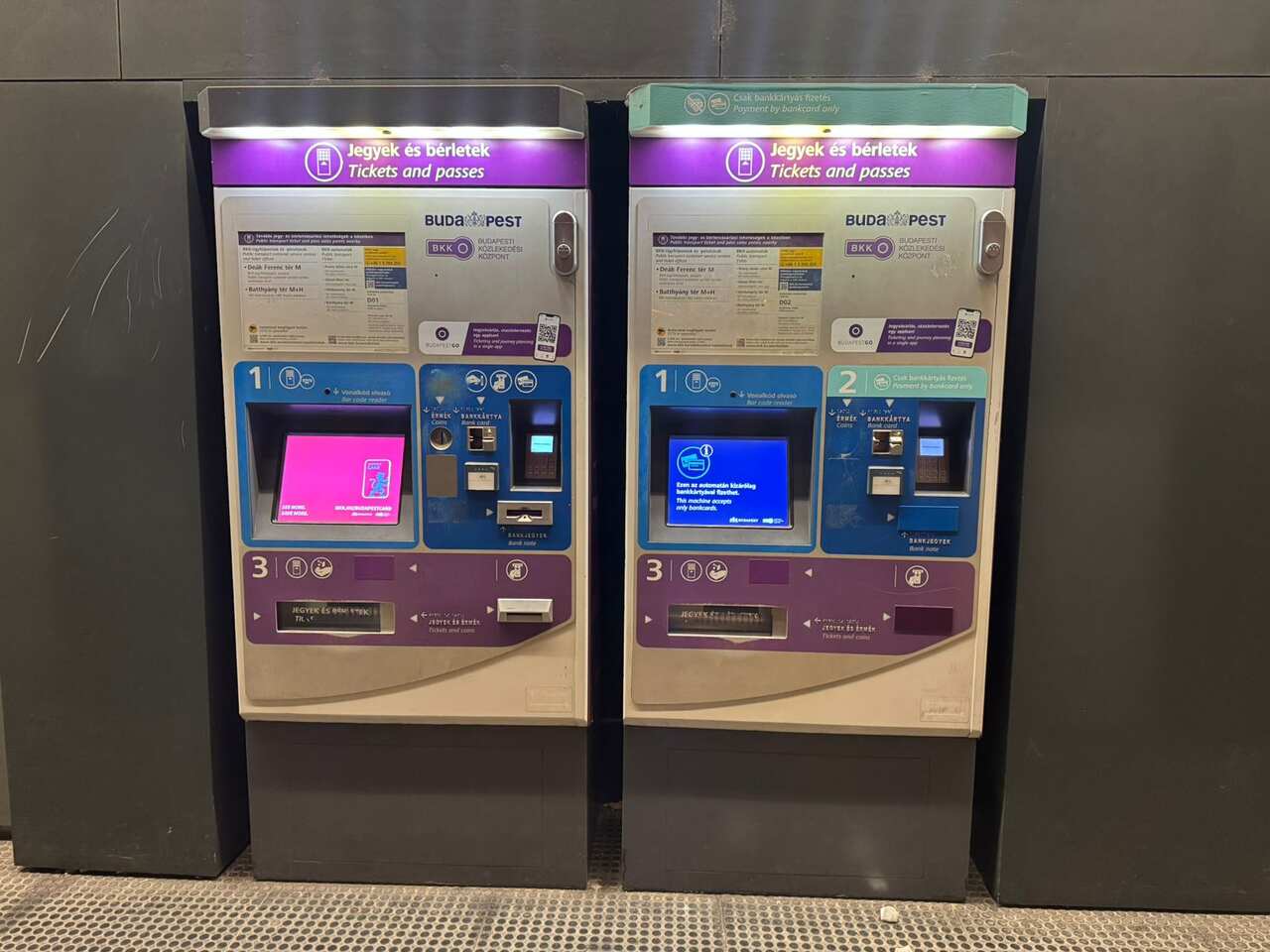
Throughout the city, especially at metro stations and major tram stops, you’ll find the purple BKK ticket machines. They’re available 24/7 and accept both cash and card. You can buy:
- paper single tickets;
- 30- and 90-minute tickets;
- travelcards;
- weekly and monthly passes;
- Budapest Card (some locations).
These machines are reliable, easy to use and multilingual, making them ideal for first-time visitors.
BudapestGO or paper tickets: which is better?
Both options work, but we recommend paper tickets because they don’t depend on internet access or battery. If your phone runs out of charge or the app fails to load during inspection, you can be fined (even if you paid for the ticket).
So paper tickets are safer for tourists! And here's a tip: locals often keep their travelcards inside a transparent phone case for easy access.
How much does Budapest public transport cost?
Budapest public transport is very affordable, and the prices are easy to understand once you know the main ticket types. Below is a clear list of the most common options, with the cost in forints and an approximate value in euros.
Most popular single-ride tickets:
- Single ticket: 500 Ft (≈ €1.30)
- Single ticket bought on the spot from the driver: 700 Ft (≈ €1.80)
- Block of 10 tickets: 4,500 Ft (≈ €11.70)
- Airport shuttle bus single ticket (100E): 2,500 Ft (≈ €6.50)
Time-based tickets and day passes:
- 30-minute ticket: 600 Ft (≈ €1.55)
- 90-minute ticket: 850 Ft (≈ €2.20)
- 24-hour travelcard: 2,750 Ft (≈ €7.15)
- 72-hour travelcard: 5,750 Ft (≈ €14.90)
Most popular passes:
- Monthly Budapest-pass: 8,950 Ft (≈ €23.30)
- 15-day Budapest-pass: 5,950 Ft (≈ €15.50)
Who travels for free:
- Seniors aged 65+ (with an passport or ID)
- Children under 6 years old
Which ticket should you buy?
Choosing the right ticket depends on how long you’re staying and how much you plan to use Budapest public transport. Here’s the easiest way to decide:
- Staying 1 day: get the 24-hour travelcard. It’s the simplest and you don’t need to validate anything;
- Staying 2–3 days: the 72-hour travelcard usually offers the best value;
- Staying 4–7 days: go for the weekly pass (valid for 7 consecutive days);
- Staying longer: if you’ll be in Budapest for a month or more, the monthly pass is by far the cheapest option;
- Using transport only a few times: buy single tickets or 30/90-minute tickets.
Budapest public transport rules
Here are the main rules you should know when using Budapest public transport:
- Be polite to other passengers and inform staff if you experience any issues;
- Most vehicles are low-floor and accessible; M3 and M4 stations are fully renovated;
- On many buses, you must board through the front door and show your ticket or pass;
- On vehicles with a button by the door, press it to open the door yourself;
- To get off , you often need to press the stop button in advance;
- On the metro, stay behind the safety line and let passengers exit first;
- Smoking is prohibited in all vehicles and at all stops;
- No food or drinks while onboard;
- Always keep your validated ticket with you for inspections.
Budapest Card: is it worth it?
The Budapest Card gives you unlimited public transport, free entry to several museums, plus discounts at attractions, restaurants, and thermal baths.
Whether it’s worth it depends on your plans:
- It can be a good deal if you’re visiting multiple paid attractions and using public transport a lot;
- It’s not worth it if you prefer mostly free sightseeing (parliament views, Fisherman’s Bastion, Danube walks, markets, etc.).
If you want a full breakdown with real examples and price comparisons, check our complete Budapest Card guide!
FAQ
If it’s your first time using Budapest public transport, here are some of the most common questions travelers usually have.
Can I bring a bike on public transport?
Yes, but only on specific lines, mainly certain metro and HÉV routes. You may also need a bike ticket, unless the route explicitly allows free transport. Always check signs or the BKK website before boarding.
Can I bring my pet?
Small pets in a fully closed carrier travel for free. Dogs can travel if they are leashed and muzzled. They must have a single ticket, unless you have a monthly pass. In that case, the dog travels for free with you.
Is public transport accessible?
Many buses and trams are low-floor, and the renovated M3 and all M4 stations are fully accessible. The BudapestGO app allows you to plan routes using only accessible vehicles and stations.
Is it safe to use public transport at night?
Yes. Budapest is generally very safe, and the night network is reliable.